


Copper Jacket
A one-man army, from a one-man studio.
Copper Jacket’s trailer, part of the rollout for its 2021 Kickstarter campaign, begins with a direct appeal: “Are you looking for an authentic retro game that you can play with a friend?” Emphasis on authentic. The video goes to great lengths to emulate the look and feel of NES-era TV ads. The standard-def presentation introduces the game under a layer of VHS-capture scuzz, featuring period-appropriate trappings such as a neon grid background and Schwarzenegger movie set dressing. The announcer revels in the eighties equivalent of the Mid-Atlantic accent, emphasizing basic gameplay details (“…for more backup and twice the fun, have a friend join in on the action in two-player mode!”) with the same cadence and enthusiasm as countless Saturday morning toy ads.
Sure, there’s also a conventional trailer, but you can tell where their hearts lie. Copper Jacket (the game) is likewise a pastiche of NES mores. Developed by Nicholas Monson in 2019, then released in various formats over the next few years as Monsoon Studios, it was a loving recreation of a certain type of late-eighties video game, downstream from the era’s action movies.
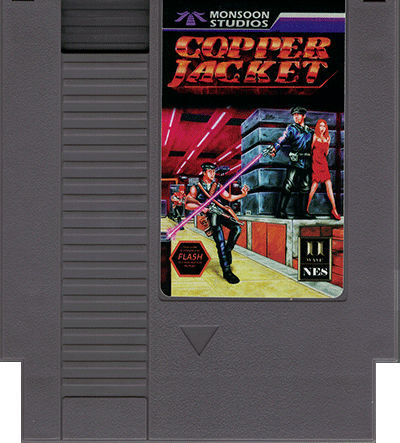
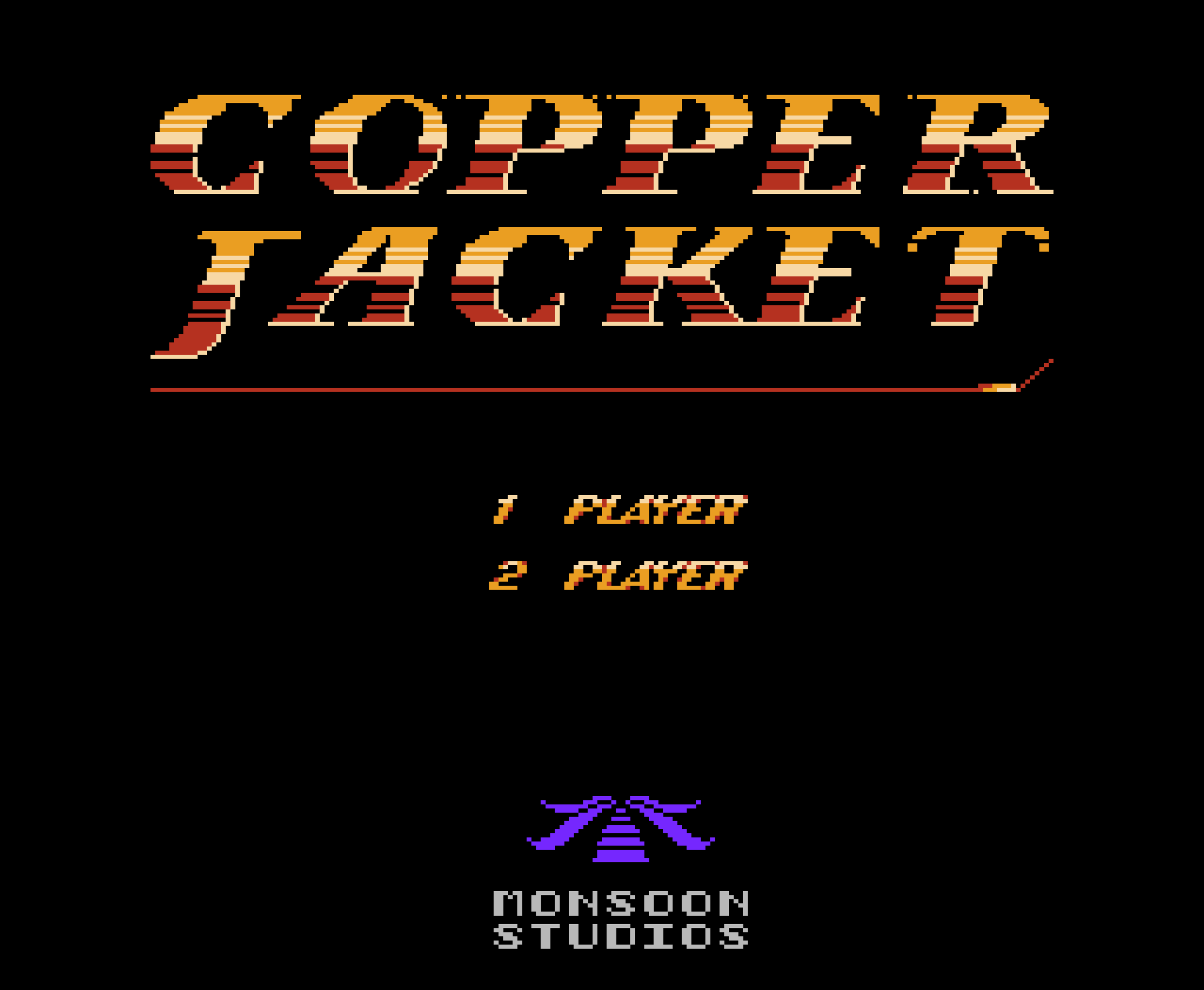
Copper Jacket
Release date: 2023
Developer/Publisher: Monsoon Studios

zzz
Copper Jacket is a top-down infantry shooter, a specific genre that was well-represented on the NES but was never really codified with a catchy name. These games were present in the system’s catalog almost from the start, first as Capcom’s port of Commando, then other arcade conversions like the Ikari Warriors series. Later games like Heavy Barrel and Guerilla War built upon the genre’s arcade roots (despite also being arcade ports), adding deeper power up mechanics and environmental obstacles. It was also a common way to add gameplay contrast to side-scrolling platformers, serving as alternate levels in games like Super C and Bionic Commando. (It’s interesting that two of the better games in this genre, Jackal and Iron Tank, are completely vehicle-based. Although this feels like a slightly different evolutionary branch, given the ways a jeep or tank change the core gameplay.)
There were a few attempts to adopt this style of gameplay into different settings (King’s Knight, Gun.Smoke), but the genre’s mainstays were usually synonymous with war movies. From the start these games were an assortment of commando raid influences, focused on a lone soldier’s (or two, if you’re playing with a friend) assault through an entrenched army’s fortification. This naturally led to atmospheric nods to existing media, situating these games in familiar movie environments like World War II (Commando), the Cuban Revolution (Guerilla War), and Norris/Stallone/Schwarzenegger films (just about everything else).
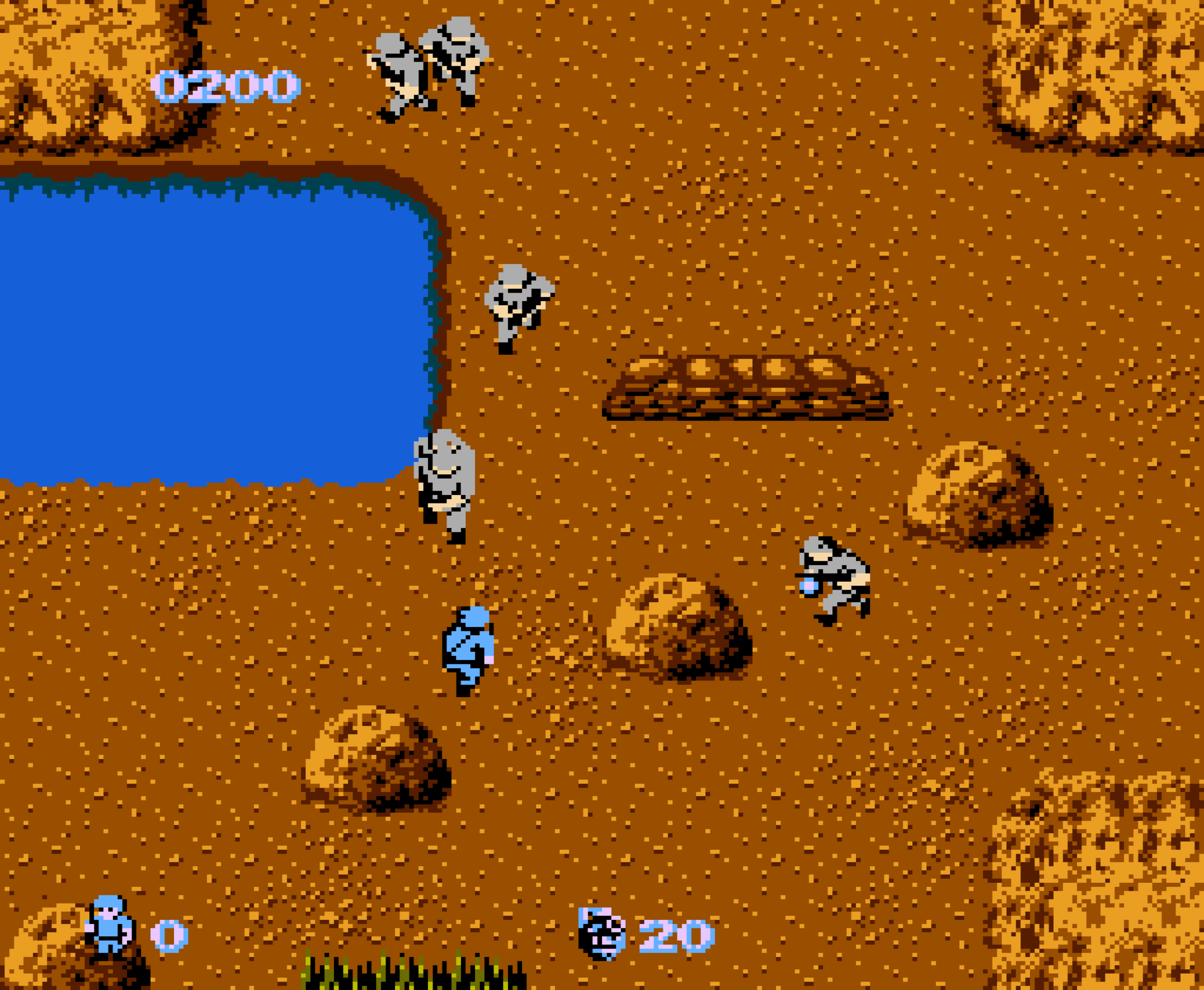
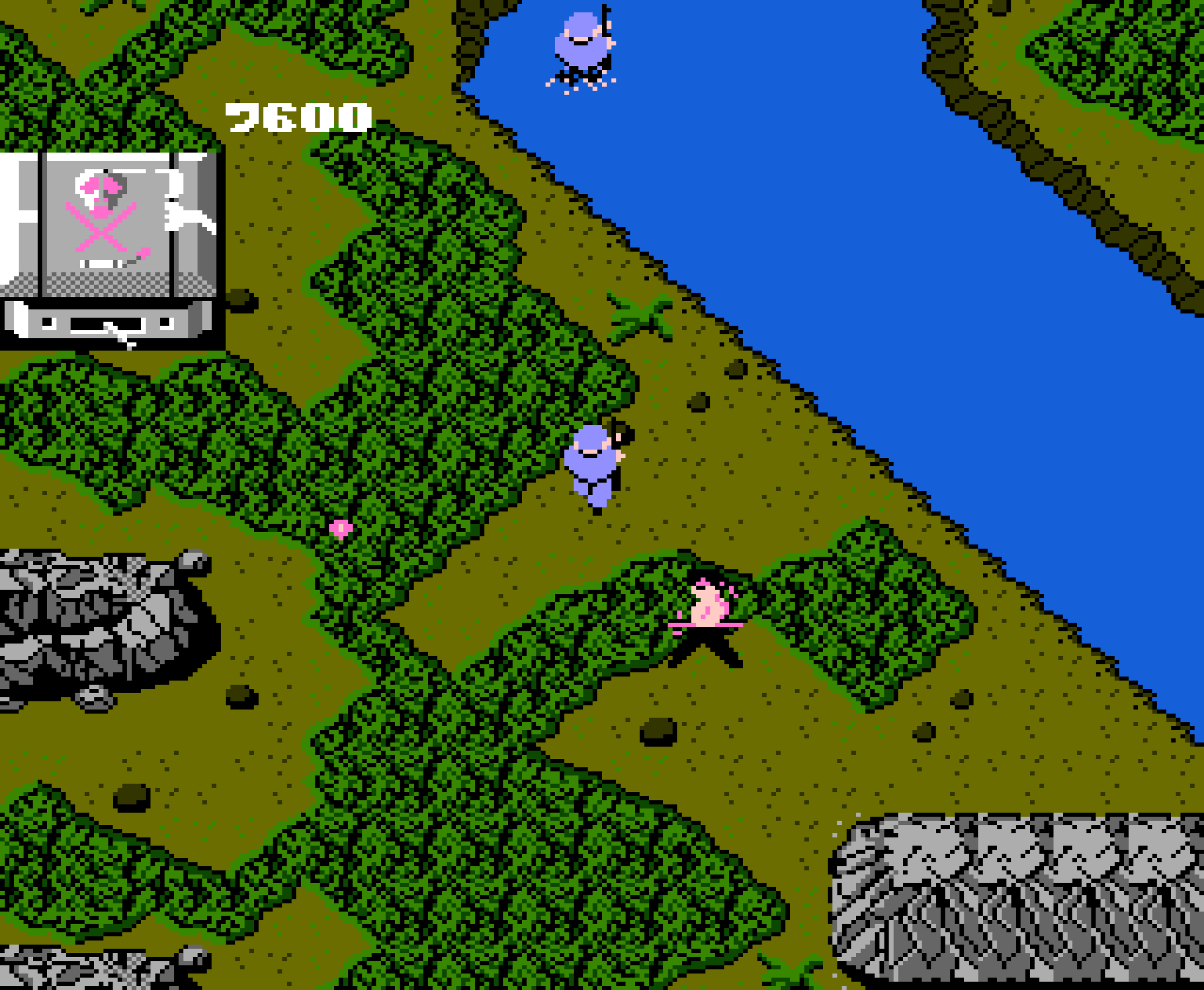
So it’s fitting that Copper Jacket, especially with thirty years’ hindsight, would pay tribute to long-standing genre staples. At its core the game plays similar to Commando or Ikari Warriors: your character advances vertically, without the ability to backtrack, firing in eight directions and occasionally earning weapons power ups.
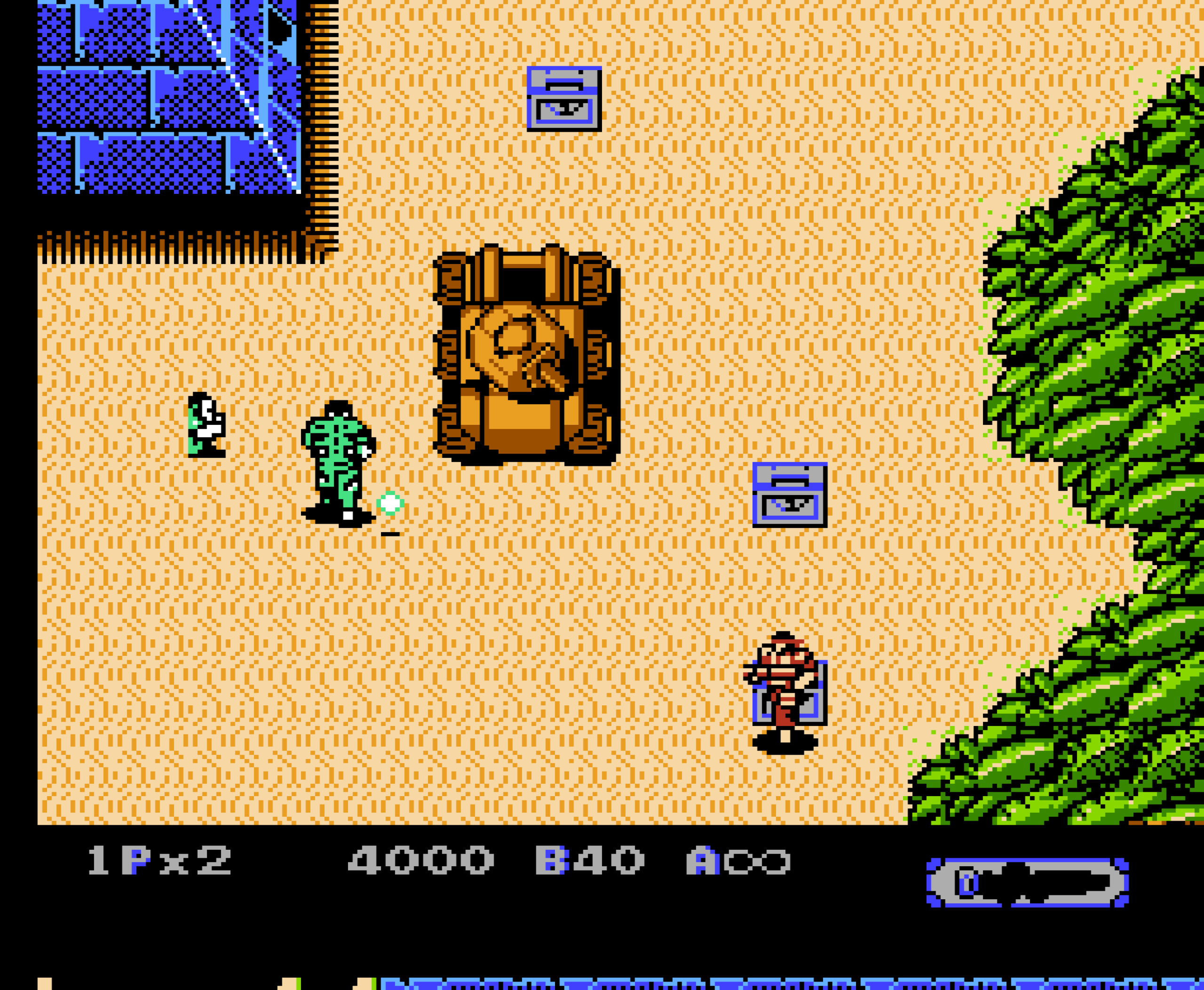
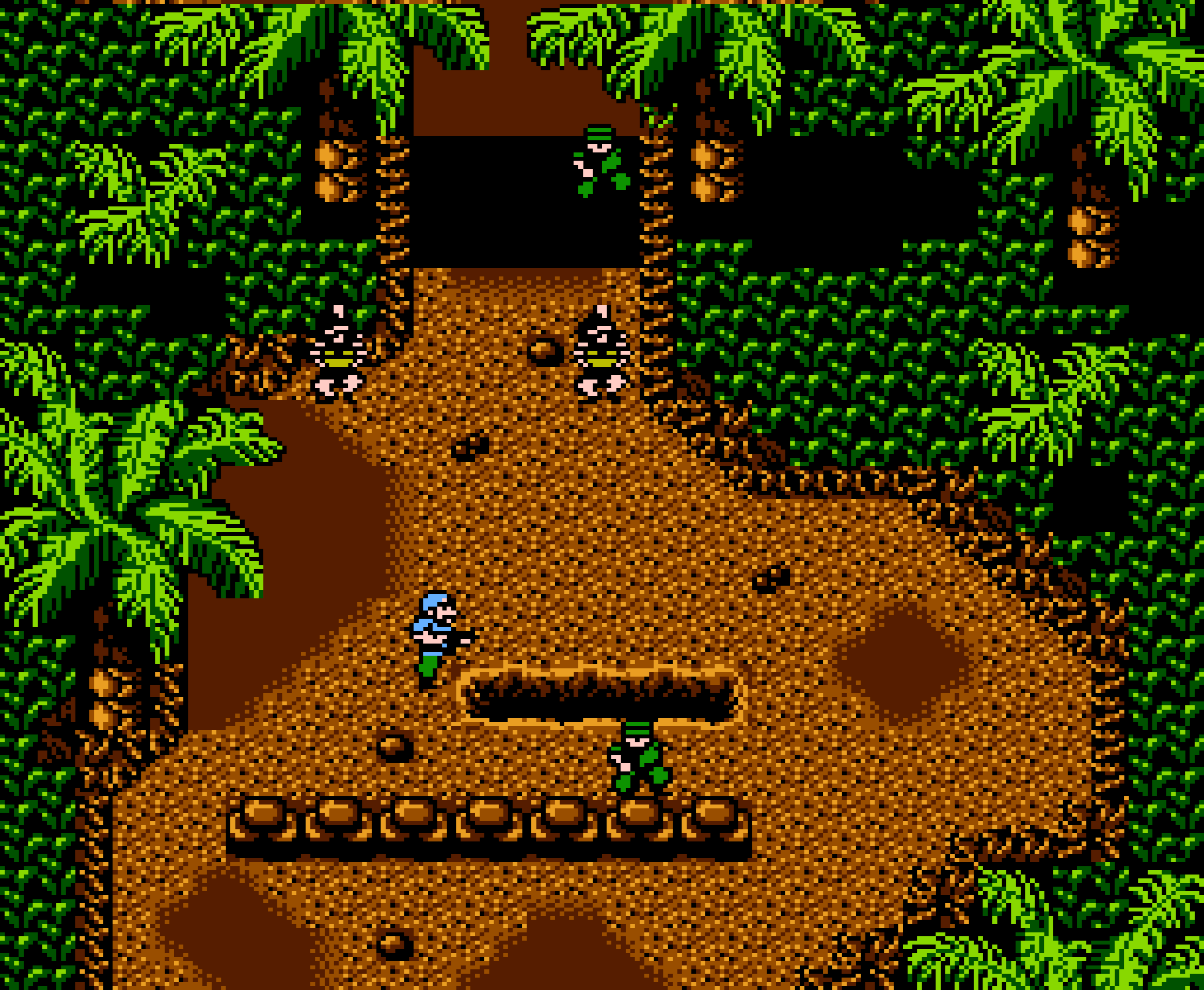
Monson cites Metal Gear as an inspiration, and the plot follows the same basic trajectory: an elite soldier, betrayed by his ex-commander, must infiltrate his base to get revenge. The stakes are a bit different. Rather than thwarting a walking nuclear tank you are tasked with rescuing your kidnapped fiance. It’s a story motivation you could tie to any number of beat ‘em ups (or Super Mario Bros. itself, if you want to go right back to the start), but there is a bit of Rolling Thunder here in particular—levels are broken up by cutscenes where your nemesis takes a moment to taunt you and threaten your love interest.
Once you get past the surface similarities, there are other, smaller influences that give Copper Jacket a unique feel. It adopts Contra’s power up system. A series of capsules categorized by letter will sometimes fly by; shoot one down and you can upgrade your rifle. (The naming convention is essentially the same: S is for spread, F is for fireball, R is for rapid-fire, etc.) It also uses Blaster Master’s weapon downgrade mechanic. Your character has up to eight hit points (a major departure from the one-hit-kills in most similar games), but Copper Jacket punishes you by removing weapon upgrades upon taking damage.
One key difference is character scale. Copper Jacket’s player characters and enemies take up more space on screen than its counterparts. Combine this with enemies who can produce waves of projectiles, and fairly narrow corridors, and the game can start to feel claustrophobic. The game’s hit points system becomes vital (coming into contact with an enemy typically costs three points, bullets two, but power ups can refill your health). Taking a death returns you to the beginning of the stage, so without the benefit of a few mulligans the game would be unreasonably punishing.
Despite this concession, Copper Jacket is challenging. More so than its peers it is a game about managing space. Commando and Ikari Warriors spawn waves of enemies from the edges of the screen, but their wider corridors allow you plenty of room to maneuver, ultimately resulting in a game where individual encounters can feel trivial. Here, enemies appear in fixed positions.The limited real estate, as well as a brief entrance sequence before most enemies stop and open fire, incentivize you to kill everyone as soon as possible. (If an enemy with the ability to fire waves of bullets gets into position, it is possible to become boxed in without an angle to fire back.)
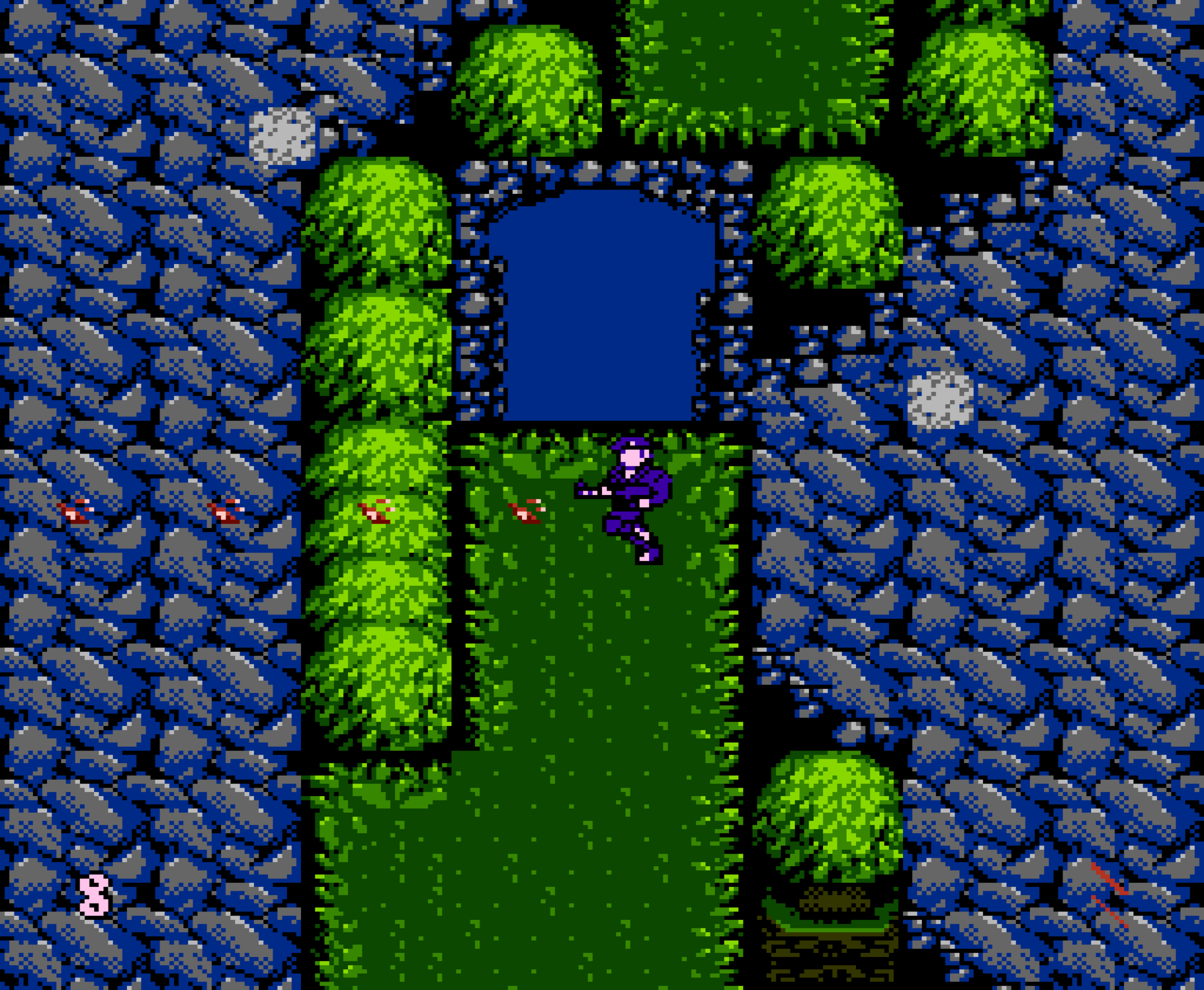
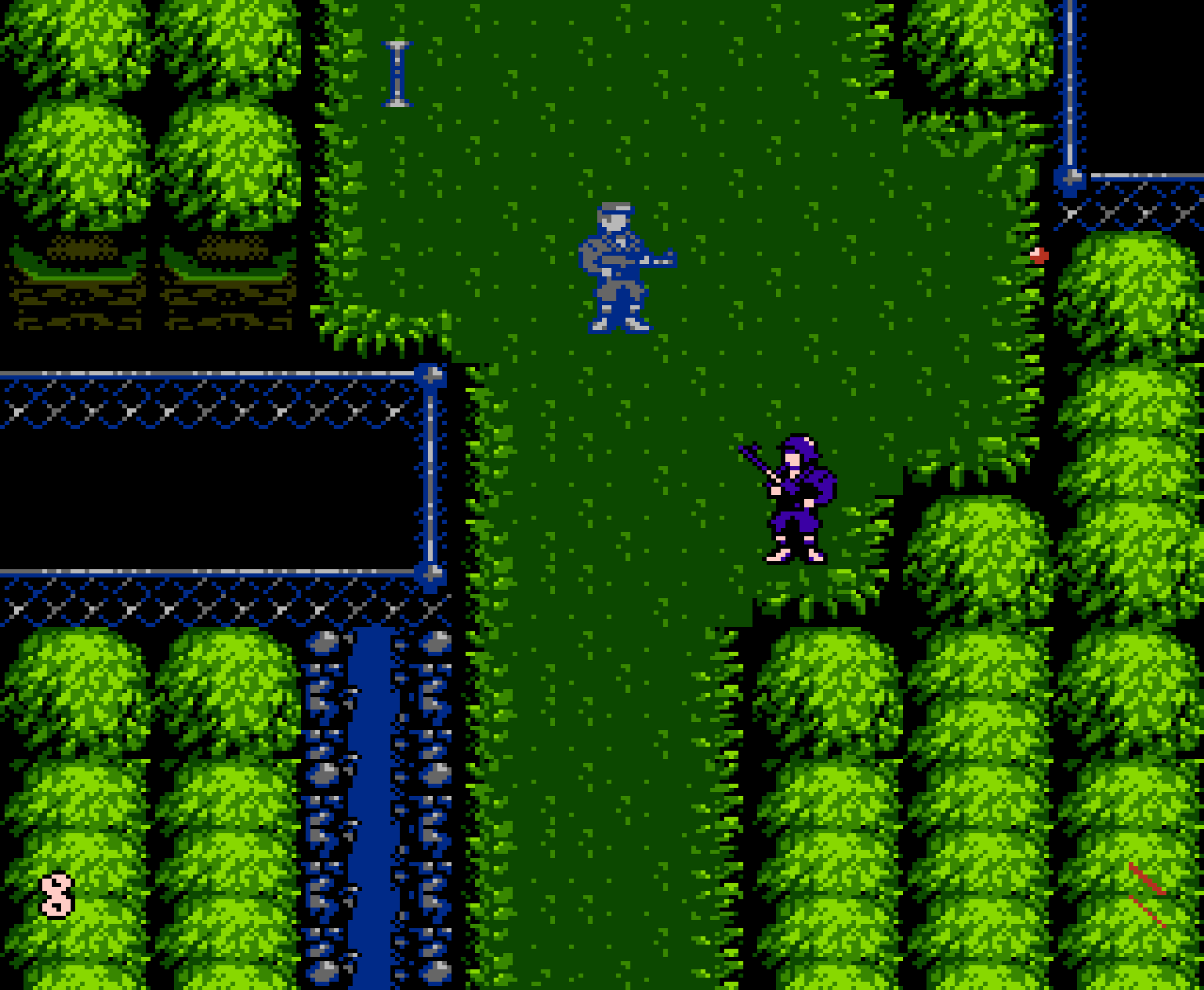
Again, unexpectedly, there’s a bit of Rolling Thunder baked into this. Rolling Thunder’s manual describes the practice of using a “gun shield,” or firing a preemptive shot, then chasing it to the edge of the screen so your bullet will kill an oncoming enemy before they can attack. The same idea works here; the best way to neutralize enemy soldiers is to take them out before they have the chance to assemble and overwhelm you.
There are a few other gameplay wrinkles, including a full co-op mode. Instead of the typical grenade toss in Commando-like games, the A button in Copper Jacket sets a bomb which can be remotely detonated. There’s a fascinating paper trail explaining some of these decisions. Monson posted an early build of the game to the NESDev forums, along with a developer log and a call for feedback. At this stage the A button had no function; it was an iterative decision made late in the development process, partially inspired by public evaluation.

There is an unusual amount of insight available into Copper Jacket’s production, especially compared to the black-box nature of eighties and nineties NES development. But even by modern homebrew standards the game’s creation is well-documented. Monson gave an in-depth, post release interview with A Homebrew Draws Near!, outlining everything from his early inspiration to the struggles of managing a physical release in the supply-constrained Covid era.
The interview presents Monson as something of a multi-hyphenate, which I suppose would be necessary to see every aspect of a game’s development through to completion. He cites a diverse background leading up to the creation of the game, including a long history making chiptunes and sprite art, then working with assembly language and even PCB design. Taking a step back and considering the arduous nature of solo game production, it’s funny that Copper Jacket becomes a metaphor for its own development. Reflecting on the game’s themes, Monson notes, “I suppose what resonates with me here in this genre is the fantasy of one man (perhaps accompanied with a friend) going into a huge military base and overthrowing it with sheer will and skill, in order to save a loved one, the planet, or something of vastly great importance/value.”
Ultimately, that sense of dedication led Monsoon Studios to Kickstarter and a successful campaign to publish the game as a proper, physical release, though the publication process sounds like it was fraught. Monson describes “several” failed attempts to have NES boxes produced, and something of a trial-and-error effort to find cartridge labels that behave like the originals. The dedication to details is impressive; Copper Jacket’s physical form is nearly indistinguishable from other NES carts, down to the “Rev-A” mark on the back. Again, it comes back to authenticity. Monson describes the act of developing for obsolete hardware, and producing period-accurate collateral, as a holistic process “…centered on continuing the life of retro video games and other associated artworks (by “associated artworks” this refers to vintage ads made with old tech, airbrush and acrylic cover art, etc.)…Copper Jacket is the first full commitment to the studio’s values.”
