


Changeable Guardian Estique
Xxxxx x xx xxxxxx
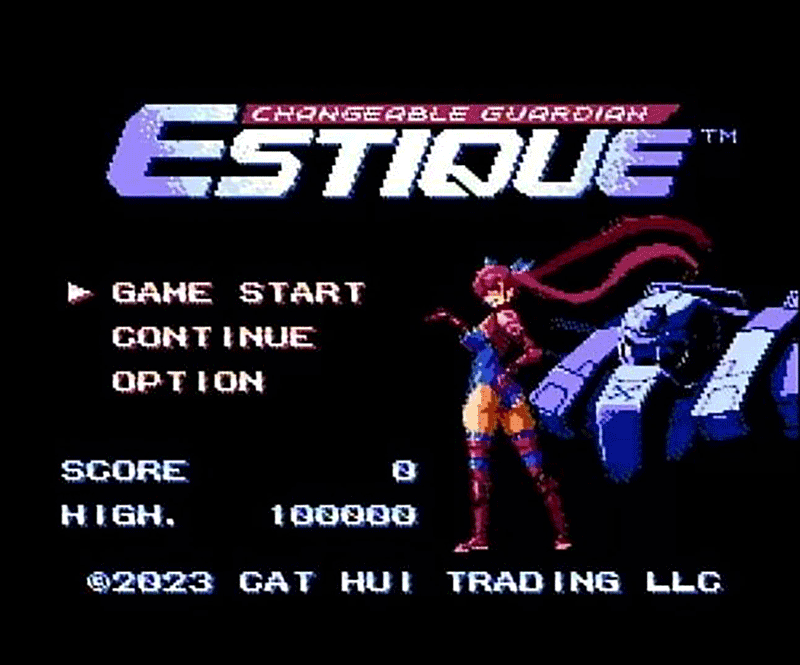
The first thing that stands out when reading the promotional materials for Changeable Guardian Estique, Cat Hui Trading’s side-scrolling shooter, is the pedigree of the development team. Its press release cites ten people on the production staff, with shooter-centric experience ranging from early console and arcade development to more recent releases like Deathsmiles. Designer/programmer Takayuki Hirono’s résumé is particularly impressive. Over the years he’s worked on NES shooter mainstays such as Zanac and Gun-Nac, not to mention Blazing Lasers, the Aleste series and its various branches like Space Megaforce and M.U.S.H.A. (And just for the hell of it, he’s also listed in the credits of other noteworthy games like The Guardian Legend and Puyo Puyo.)
Less is available about Cat Hui Trading itself. Changeable Guardian Estique was their first of two releases, followed by the untranslated graphic adventure Hyper Euphoria in mid-2026. Their website is charmingly esoteric, if a bit daunting for non-Japanese speakers. (I appreciate the seventy-nine cat photos, only counting page one.)
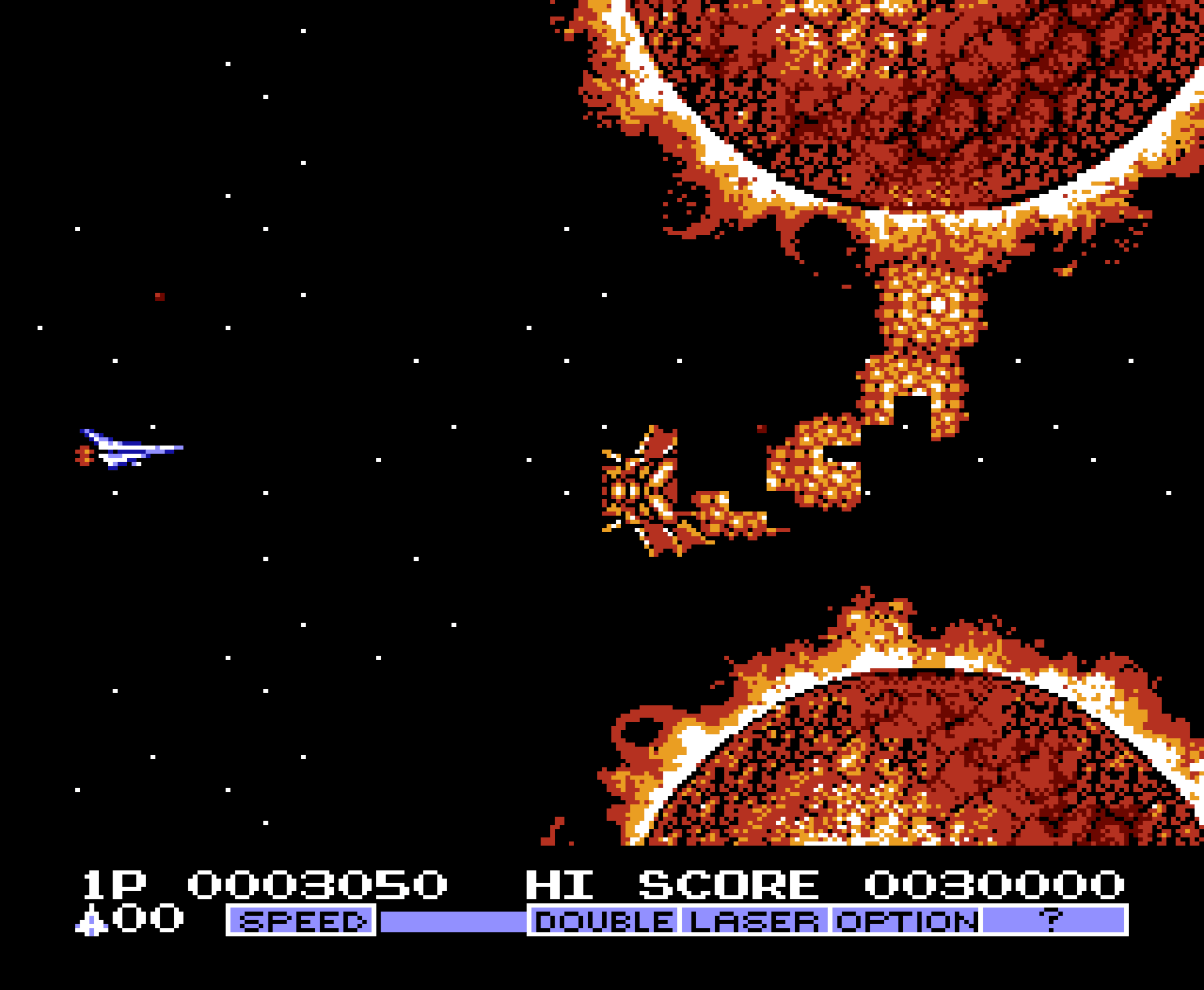
Among the game’s credited staff, there are several mentions of retro compilations and early-nineties mini consoles. This makes sense, considering some user-friendly gameplay and interface updates, resembling the accessibility (or just impatience-mitigating) options that often accompany modern retrospectives. Changeable Guardian Estique is thoroughly wedded to classic shoot-em-up principles, though. It slots in comfortably with a certain sort of late-Famicom era shooter that typically never made it out of Japan (Gradius II, Parodius-Da!), pushing the NES hardware to its limits.
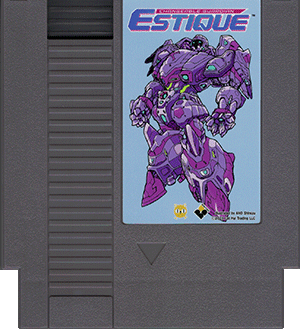
Changeable Guardian Estique
Release date: 2024
Publisher: Broke Studio/AMATA Games
Developer: Cat Hui Trading

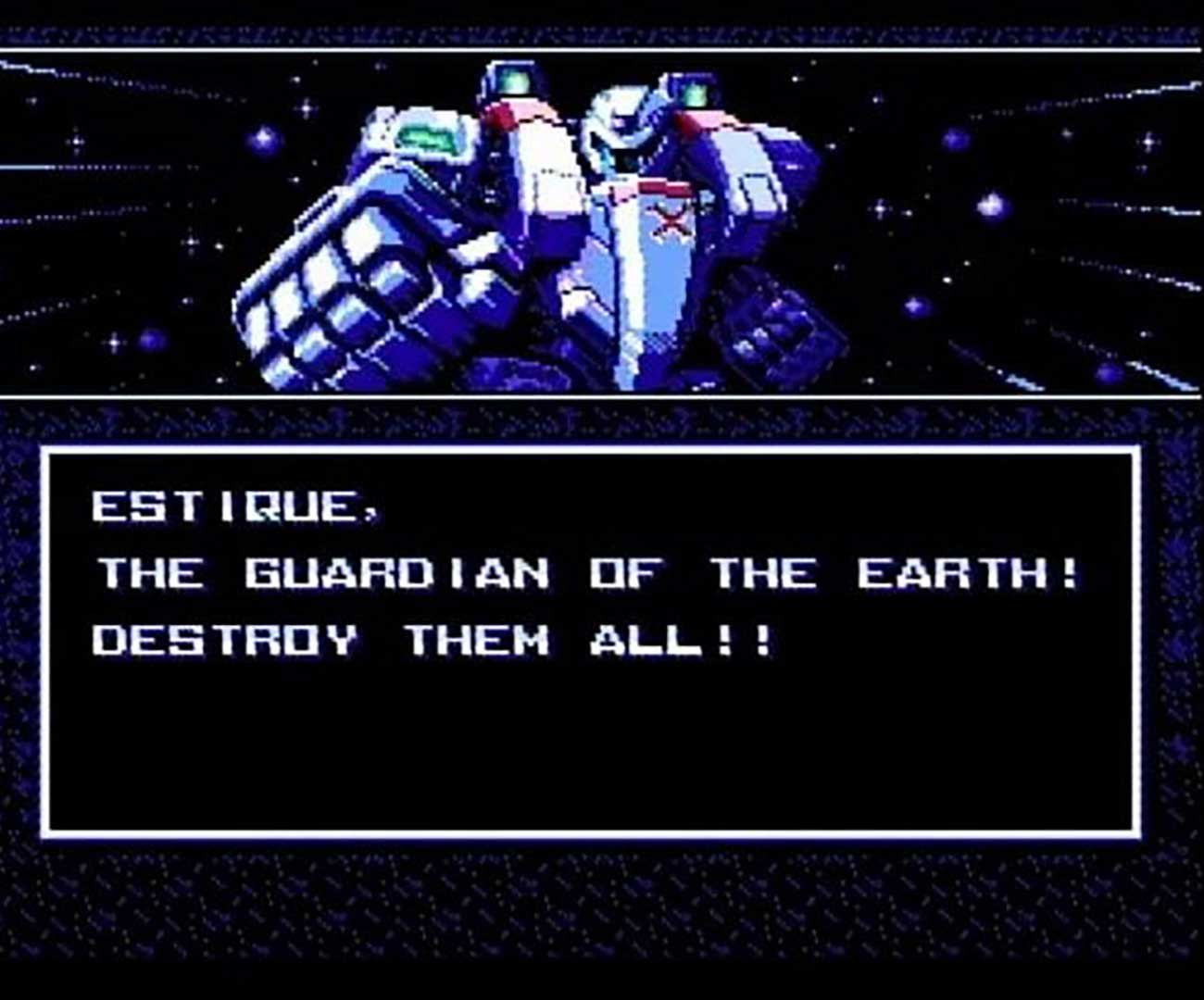
“The Guardian of the Earth! Destroy them all!!”
Changeable Guardian Estique is set in the year 2413, where a pair of mech pilots (Mary, and her co-pilot Kanon) travel to Earth, defending it against a horde of space pirates. The game is mostly split between the remaining “5 big economic cities”—Hong Kong, Bayern, London, New York and Kyoto. Mary and Kanon take on the alien invaders with their robot/spaceship hybrid “Estique,” with a sort of lighthearted nonchalance that the game presents in detailed cutscenes. (Typically they take a moment to sample local cuisine. In Bayern they’re seen in Oktoberfest garb with beer and brats. In London they enjoy some tea.)
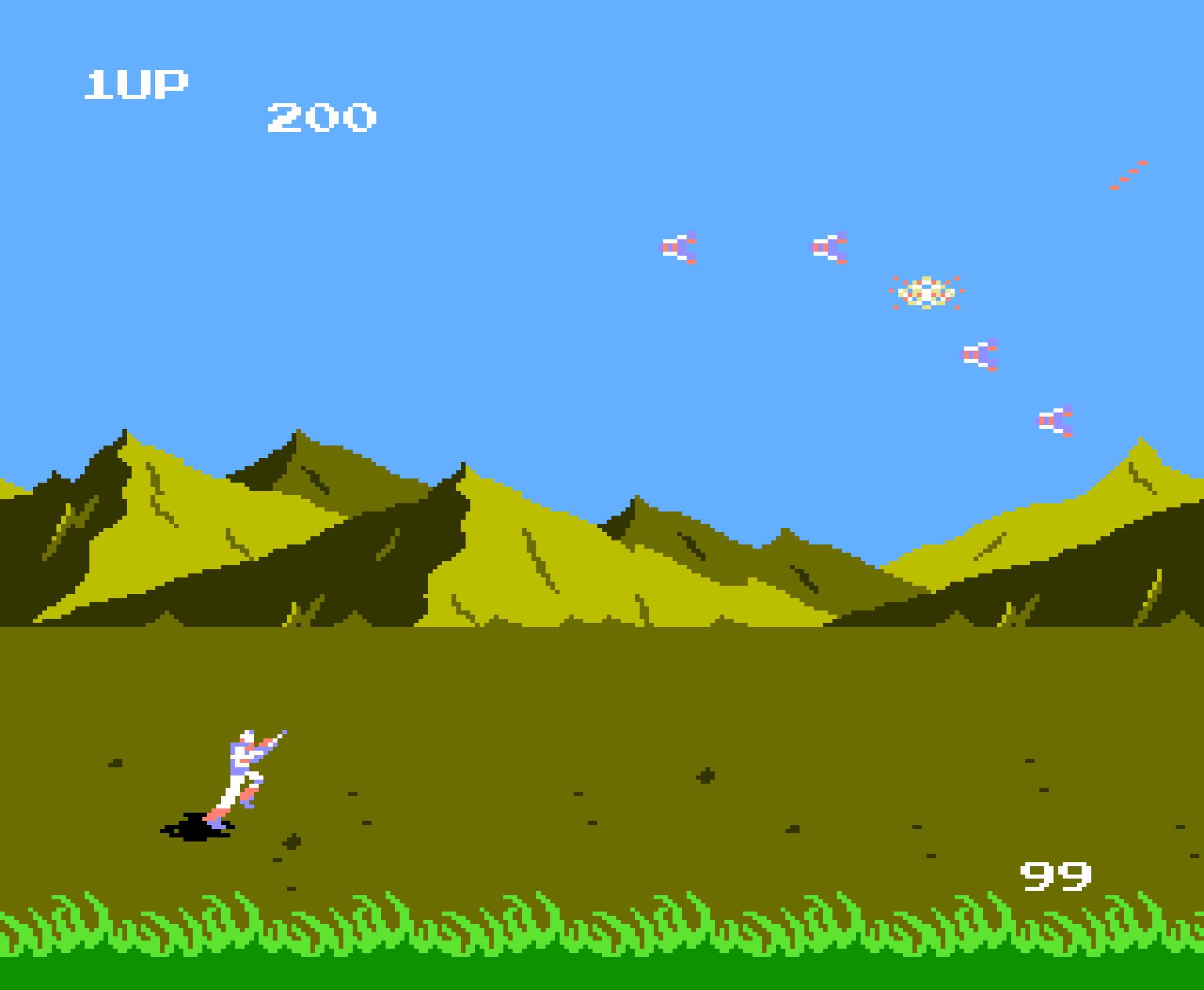
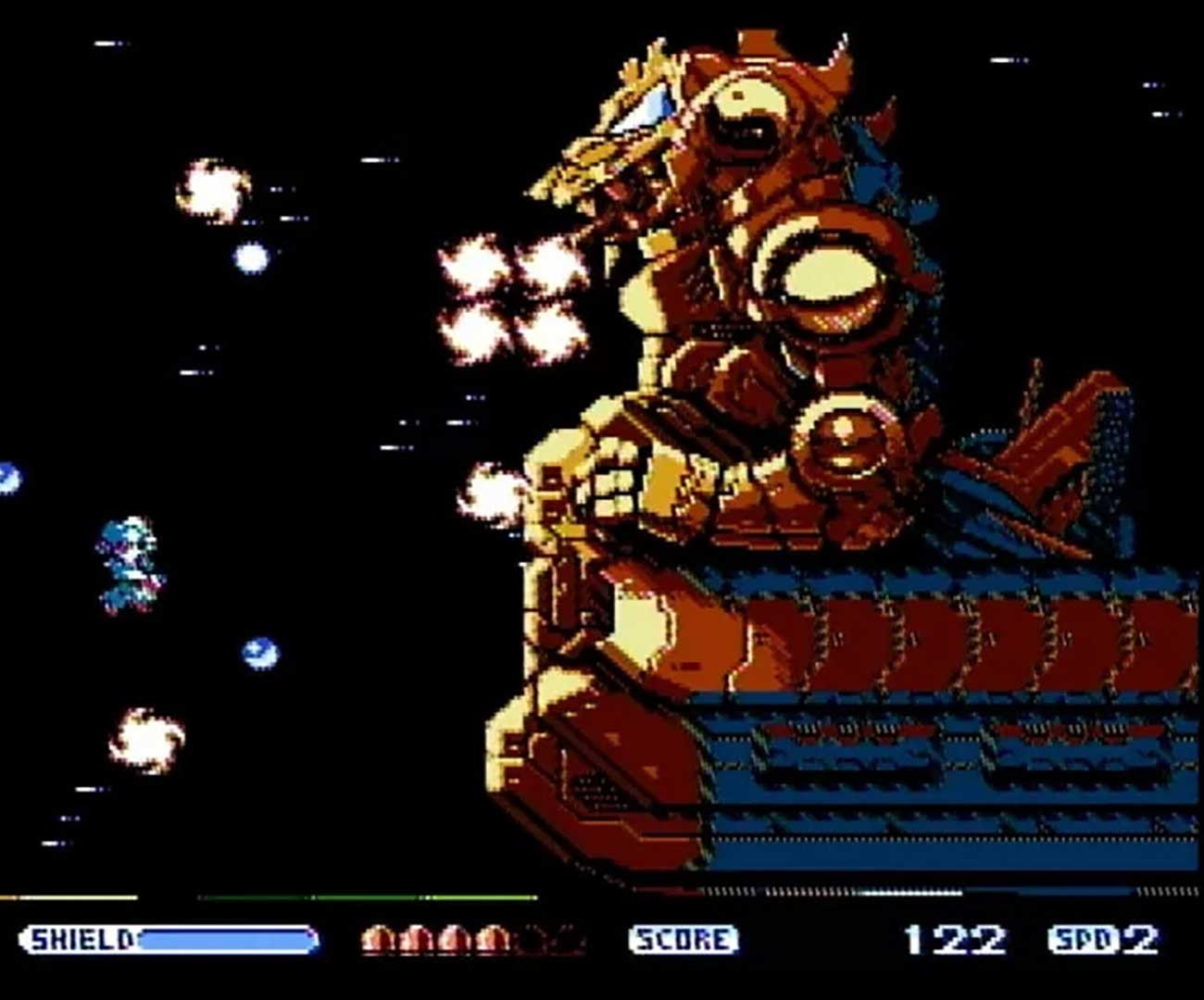
Changeable Guardian is thoroughly in the mold of games like Gradius or R-Type. But it also traces back to the Famicom shooter Formation Z, another side-scroller that allows players to shift between a robot and space ship on the fly. Formation Z treats its spaceship as something of a power-up mode, allowing you to fly over areas the robot can’t traverse—or blow past enemies who would be more difficult to hit from the ground—just as long as the mode’s timer doesn’t expire. (It reminds me a bit of transforming into a buff guy in Amagon, briefly allowing you to breeze through combat.) In Changeable Guardian there’s no penalty for transforming, encouraging you to switch between the Estique’s modes at will. Each form has its pros and cons: generally, the spaceship is easier to maneuver while the robot is more powerful.
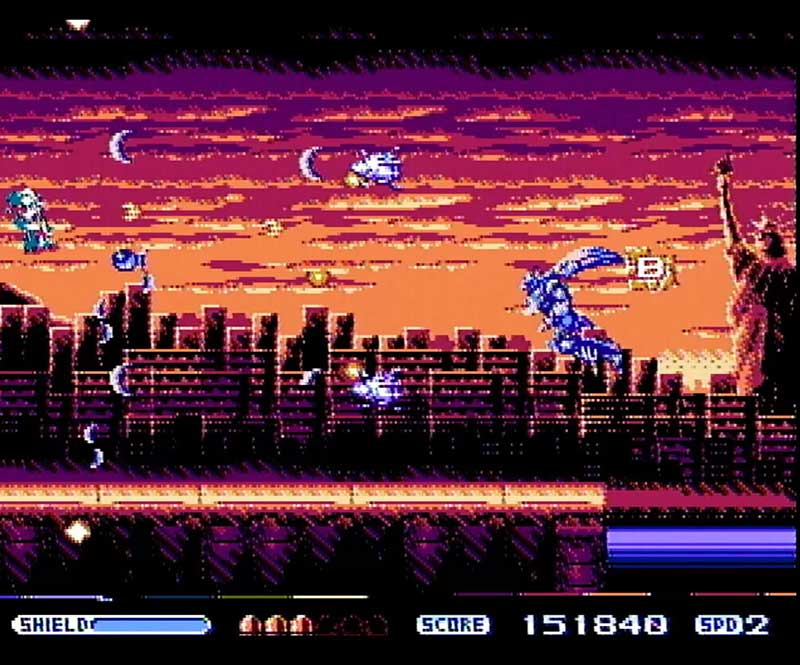
Unlike most shooters, the game uses a rechargeable shield meter rather than one-hit kills. Typically the shield allows for five or six hits before the Estique explodes, and even then the game is fairly forgiving with its checkpoints. (It does keep score, though, and high scores are reset upon each death.)
This sounds like it would make the game trivially easy, but it’s smartly designed with the recharge mechanic in mind. There is a risk/reward aspect to the mech’s two forms. The robot’s sprite occupies more vertical space, making it easier to hit, but it recharges health every ten seconds as opposed to the fighter, which needs a full forty seconds. In later stages survival necessitates finding calm pockets amid the chaos. It’s an odd comparison, but it reminds me of the rhythms of Halo on higher difficulty settings, forcing you to tactically duck out of the action in order to stay alive.
Changeable Guardian is operating on cartridge hardware that is fundamentally more advanced than its forebears and it shows. It almost feels like something lost from a more powerful console, as if it was an unreleased PC Engine game. The game’s box proclaims it’s running on a “4Mbit + 64kSRAM” cartridge, which would make it far more powerful than any other game from the NES’s original era.
How the memory was allocated is probably up for debate (as well as the differences between MB, MiB and Mb), but the largest original-era NES and Famicom games only approached 1MiB. Compare that to the production of earlier games like Super Mario Bros., where the developers were haggling over the allocation of individual bytes. (I couldn’t find a conclusive source, but conventional wisdom has SMB at about 40KB total. By contrast, the title screen image at the top of this page is 98KB.)
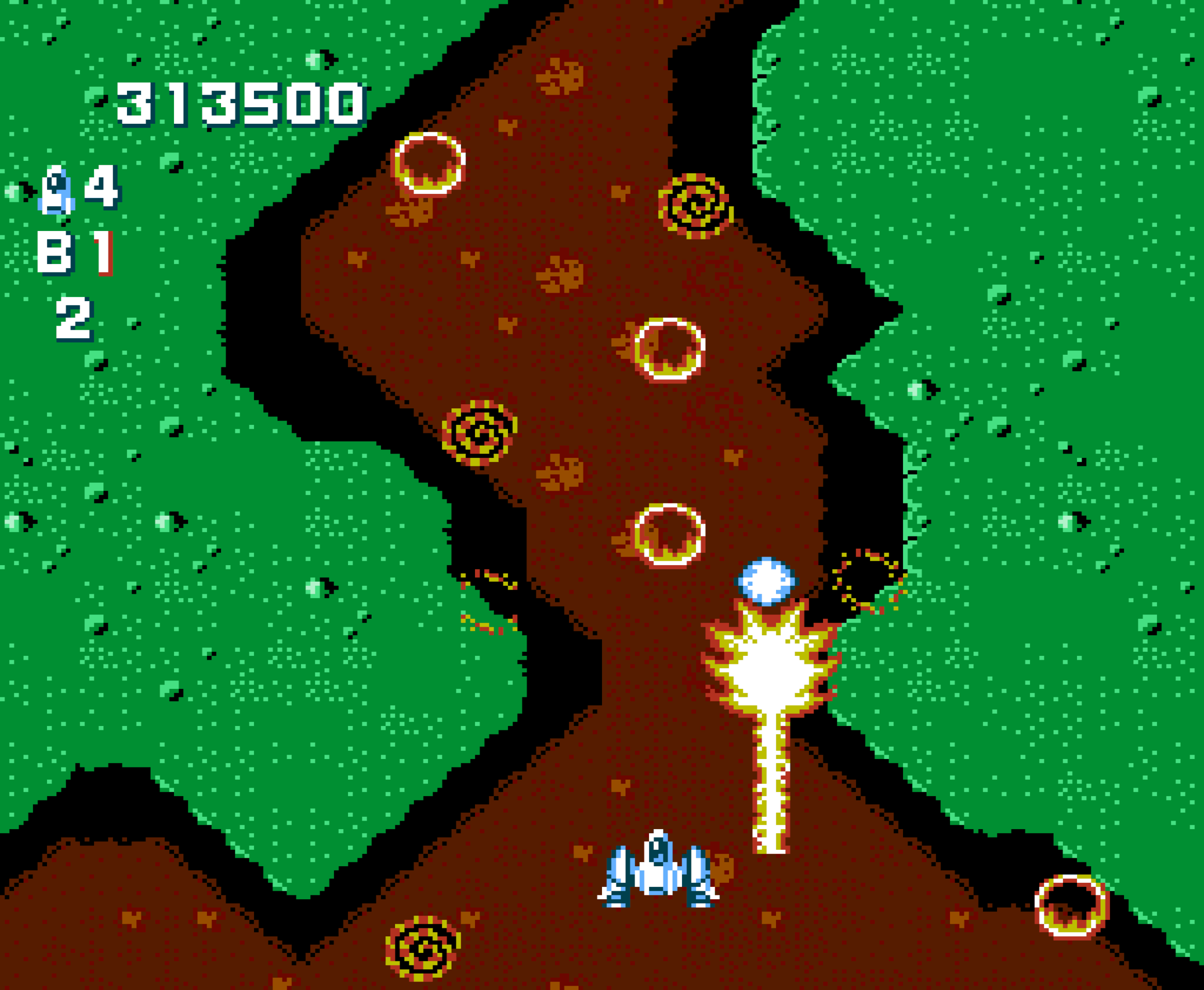
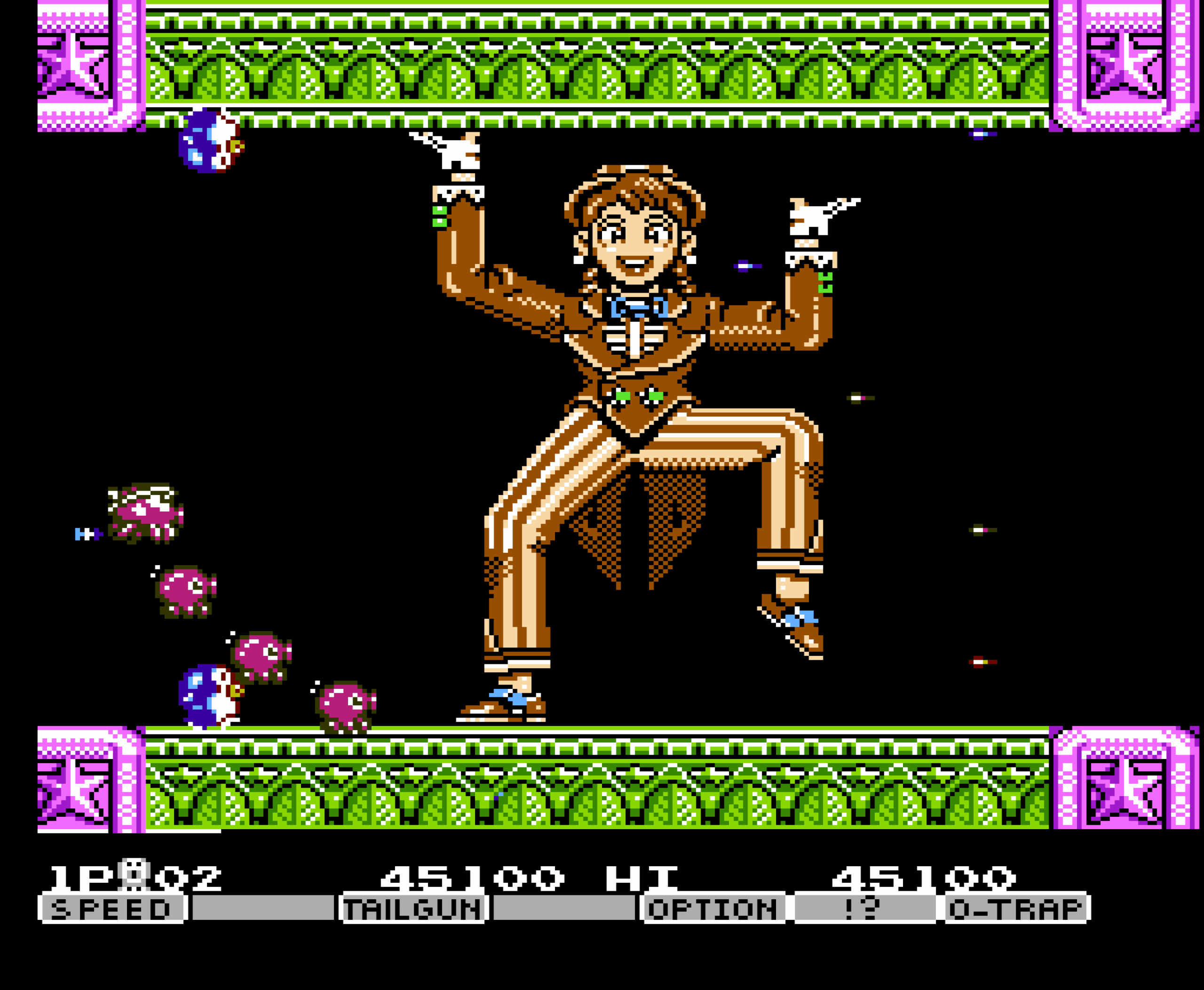
All of this, combined with the developers’ prestige, adds up to a game that is technically stunning. The backgrounds are absolutely full of detail yet never feel repetitive. The bosses are enormous, rendered with a fidelity I’m not sure I’ve seen in any other NES game. The screen is often saturated with enemies and projectiles. But crucially, the game almost never suffers any slowdown or sprite flicker, a point vital to the game’s developers. Speaking to A Homebrew Draws Near!, Director Takayuki Komabayashi cites Parodius-Da! as an inspiration, claiming that the key to a good shooter is making a game that’s “[c]omfortable and [with] minimal slow down.”

It’s reasonable to question whether it’s fair to compare Changeable Guardian to other NES shooters, given its hardware advantages, the dream-team nature of its development team, and the benefit of around thirty-five years of shooter-design hindsight. If you compare it apples-to-apples to other shooters on the platform, I think it’s comfortably the best game in its genre. It may not have the cultural cachet of trailblazers like Gradius or Life Force, but it’s more advanced in just about every facet. Even the late-gen Famicom shooters feel basic by comparison.

The game’s technological advantages are only part of the story, however. If it wasn’t for the talent and care of a set of seasoned developers returning for a passion project, it could have been nothing more than a performant mess. There are no shortage of retro indie projects that end in failure, even with early financial backing. That they were able to assemble such a collection of talent without the development descending into an ego-driven morass is an achievement in itself. The fact that Changeable Guardian is such a well-honed combination of present- and past-facing design philosophies feels like a small marvel.
But, every aspect of the game feels like they effortlessly tackled the hard part first. Changeable Guardian was given a full physical release—and even localized versions on appropriate cartridge formats—for Japanese and Western consoles. Its soundtrack even has a CD edition in Japan. Yet planned Steam and console versions are still awaiting release years later, seemingly the more straightforward path through publication. The digital release promises both versions of the game and a gallery mode, something like its own anniversary retrospective. Perhaps that’s fitting for a modern game that feels like such a celebration of past conventions.
